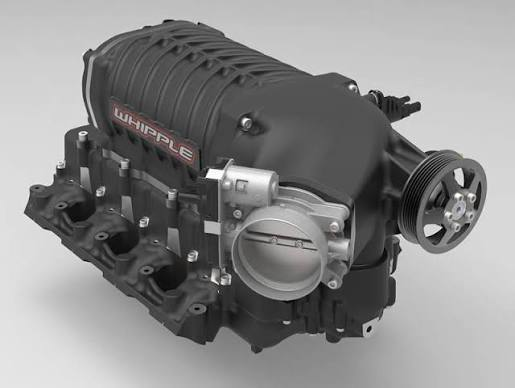
Supercharger Whipple
- Whipple Supercharger
- Whipple 2.9L
- Whipple 3.0L
- Whipple 3.8L
- Whipple 4.0L
- Whipple 4.5L
- Whipple 5.0L
Magnuson
- Magnuson TVS2300
- Magnuson TVS2650
- Magnuson TVS3100
- Magnuson TVS2650R
Harrop
- Harrop H2650
- Harrop H2650i
- Harrop TVS2300
Edelbrock
- Edelbrock E-Force 2650
- Edelbrock E-Force 2300
- Edelbrock E-Force 1740
Kenne Bell
- Kenne Bell 2.6L
- Kenne Bell 2.8L
- Kenne Bell 3.2L
- Kenne Bell 3.6L
- Kenne Bell 4.2L
- ProCharger D-1SC
- ProCharger D-1X
- ProCharger F-1
- ProCharger F-1A
- ProCharger F-1X
Whipple vs Magnuson: Quick Comparison
| Feature | Whipple | Magnuson |
|---|---|---|
| Main technology | Twin-screw | Eaton TVS positive-displacement |
| Common sizes | 2.9L, 3.0L, 3.8L, 4.0L+ | TVS2300, TVS2650, TVS3100 |
| Boost response | Immediate | Immediate |
| Low-RPM torque | Excellent | Excellent |
| High-RPM airflow | Excellent | Excellent |
| Intercooling | Application-dependent | Application-dependent |
| OEM-style kits | Yes | Yes |
| V8 applications | Extensive | Extensive |
| LS/LT applications | Yes | Yes |
| HEMI applications | Yes | Yes |
| Coyote applications | Yes | Yes |
| Best choice | Depends on application/build | Depends on application/build |
Important: There isn’t one universal winner. The specific kit, engine, inlet, pulley, intercooling system, calibration and intended power level matter more than the brand name alone.
What Is a Whipple Supercharger?
Whipple is particularly known for its twin-screw supercharger technology. Current Whipple Gen 6 systems include 3.0L configurations, with application-specific systems designed around airflow, cooling and vehicle integration.
For example, Whipple’s Gen 6 3.0L system for 2018–2023 Dodge 6.4L HEMI applications is advertised at up to 710 HP and 650 lb-ft with 93-octane fuel. The system uses a 112 mm Crusher inlet and dual-pass intercooling.


5
Advantages of Whipple
1. Twin-Screw Technology
Whipple’s twin-screw design is intended to move large volumes of air efficiently while producing immediate boost.
2. Strong High-Power Potential
Whipple offers several large-displacement supercharger configurations, making the brand attractive to serious high-power builders.
3. Strong V8 Application Coverage
Whipple systems are available for platforms including:
- Ford Coyote
- Mustang
- F-150
- Dodge HEMI
- Challenger
- Charger
- Chrysler 300
- GM applications
- Various performance V8 platforms
4. Complete Supercharger Systems
Depending on the application, kits can include components such as:
- Supercharger
- Intercooler
- Heat exchanger
- Fuel components
- Injectors
- Sensors
- Belt drive components
- Calibration equipment
For example, Whipple’s 6.1L HEMI Gen 6 3.0L system includes high-flow injectors, billet fuel rails, intercooler hardware and a calibration/data-logging solution.
What Is a Magnuson Supercharger?
Magnuson is strongly associated with Eaton TVS supercharger technology, including the TVS2300 and TVS2650.
The Magnuson TVS2650 uses a four-lobe, high-helix rotor design and is offered in numerous vehicle-specific applications. Magnuson emphasizes airflow efficiency, intercooling and OEM-style integration in its systems.


6
Advantages of Magnuson
1. Eaton TVS Technology
Magnuson uses Eaton TVS technology across many of its performance supercharger systems.
2. Excellent Throttle Response
Like other positive-displacement superchargers, the TVS architecture provides boost very early in the RPM range.
3. Strong Thermal Management
Many Magnuson kits use integrated charge-air cooling systems.
For example, Magnuson’s current F-150 5.0L TVS2650 system uses dual charge-air coolers, a large heat exchanger and a high-flow intercooler pump. Magnuson rates that application at 725 hp and 650 lb-ft at the crank.
4. OEM-Style Integration
Magnuson emphasizes application-specific fitment and OEM-style installation. Its Cadillac CT5-V Blackwing TVS2650 system, for example, is designed as a direct bolt-on replacement for the factory LT4 supercharger.
Whipple vs Magnuson: Supercharger Technology
This is one of the biggest differences.
Whipple
Twin-screw
The two intermeshing rotors compress and move air through the supercharger.
Magnuson
Eaton TVS positive-displacement
TVS systems use high-helix, four-lobe rotors to move air efficiently.
Both technologies can provide:
- Immediate boost
- Strong low-RPM torque
- Excellent throttle response
- High airflow
- Strong performance potential
Therefore, simply saying “twin-screw is better than TVS” or vice versa is too simplistic.
The complete system matters.
Whipple vs Magnuson Horsepower
Horsepower should be compared kit against kit, not brand against brand.
For example, Magnuson’s current F-150 5.0L TVS2650 system is rated at 725 hp / 650 lb-ft at the crank.
Meanwhile, a Whipple Gen 6 3.0L system for a Dodge 6.4L HEMI is advertised at up to 710 hp / 650 lb-ft on 93-octane fuel.
Those numbers cannot be used as a direct Whipple-vs-Magnuson laboratory comparison, because they’re different engines, vehicles, calibrations and applications.
For your website, this distinction is important. Avoid publishing a table claiming one brand is universally more powerful based on different vehicle applications.
Whipple vs Magnuson for LS Engines
Both brands have solutions for GM performance platforms.
For an LS3, LS2, LS7 or related LS-based build, compare:
- Supercharger displacement
- Intake design
- Intercooler capacity
- Heat exchanger size
- Throttle body
- Pulley options
- Fuel requirements
- ECU/tuning requirements
- Hood clearance
- Desired horsepower
For a street-driven LS3, an application-specific complete kit may be preferable to choosing the largest possible blower.
Whipple vs Magnuson for Coyote 5.0
The Ford Coyote 5.0L is another major application.
For a Coyote build, compare:
Whipple
- Supercharger size
- Inlet capacity
- Intercooling
- Fuel system
- Calibration
- Target horsepower
Magnuson
- TVS2650 configuration
- Intercooling
- Fuel system
- Calibration
- Vehicle fitment
Magnuson currently offers a TVS2650 system for 2021–2026 F-150 5.0L Coyote engines, rated at 725 hp and 650 lb-ft at the crank.


5
Whipple vs Magnuson for HEMI
This is especially relevant to your website because you’re already targeting 6.2 HEMI, Hellcat, Redeye and other HEMI keywords.
Both companies offer HEMI-related supercharger solutions, but compatibility varies by engine and vehicle.
For example, Whipple currently lists Gen 6 3.0L systems for Dodge 6.1L and 6.4L HEMI applications.
Magnuson offers TVS2650 systems for various HEMI applications, including 5.7L and 6.4L Dodge/Jeep applications.
Which Is Better: Whipple or Magnuson?
Choose Whipple if:
- You want a twin-screw system.
- You’re building a high-power application.
- You want a large-displacement Whipple system.
- Your specific vehicle has a well-developed Whipple kit.
- You want to maximize airflow and future power potential.
Choose Magnuson if:
- Your vehicle has a well-developed TVS application.
- You prioritize OEM-style integration.
- You want an Eaton TVS-based system.
- Thermal management is particularly important.
- You want a complete application-specific system.
For a street car:
Either can be excellent.
For a high-power build:
Look at the specific blower size, airflow capacity, intercooling, fuel system and engine combination rather than choosing purely by brand.
Whipple vs Magnuson: What Should You Buy?
Before purchasing, determine:
1. Engine
LS3? LT4? Coyote? HEMI?
2. Vehicle
Mustang? Camaro? Challenger? F-150? Corvette?
3. Target horsepower
600 HP? 800 HP? 1,000+ HP?
4. Fuel
Pump gasoline? E85? Race fuel?
5. Internal engine
Stock or forged?
6. Cooling
Street use or repeated track/drag use?
7. Tuning
Stock calibration, supplied calibration or custom ECU tuning?
These factors should determine the supercharger rather than choosing based only on the Whipple or Magnuson name.
Frequently Asked Questions
Is Whipple better than Magnuson?
Not universally. Whipple specializes in twin-screw systems, while Magnuson uses Eaton TVS technology across many applications. The best choice depends on the specific engine, vehicle, horsepower target and kit.
Is Whipple a twin-screw supercharger?
Yes. Whipple is well known for twin-screw supercharger technology.
Is Magnuson a TVS supercharger?
Magnuson offers supercharger systems using Eaton TVS technology, including TVS2300 and TVS2650 systems.
Which has better low-end torque?
Both positive-displacement designs can produce strong low-RPM torque and immediate boost. The specific pulley, engine, calibration and supercharger configuration determine the actual result.
Which is better for a Coyote 5.0?
Both can be excellent choices. Compare the exact vehicle-specific kits, cooling system, fuel system, calibration and desired horsepower.
Which is better for an LS3?
Either can work very well when the correct kit is selected. The deciding factors should be power target, packaging, intercooling, fuel system and tuning.